.png)


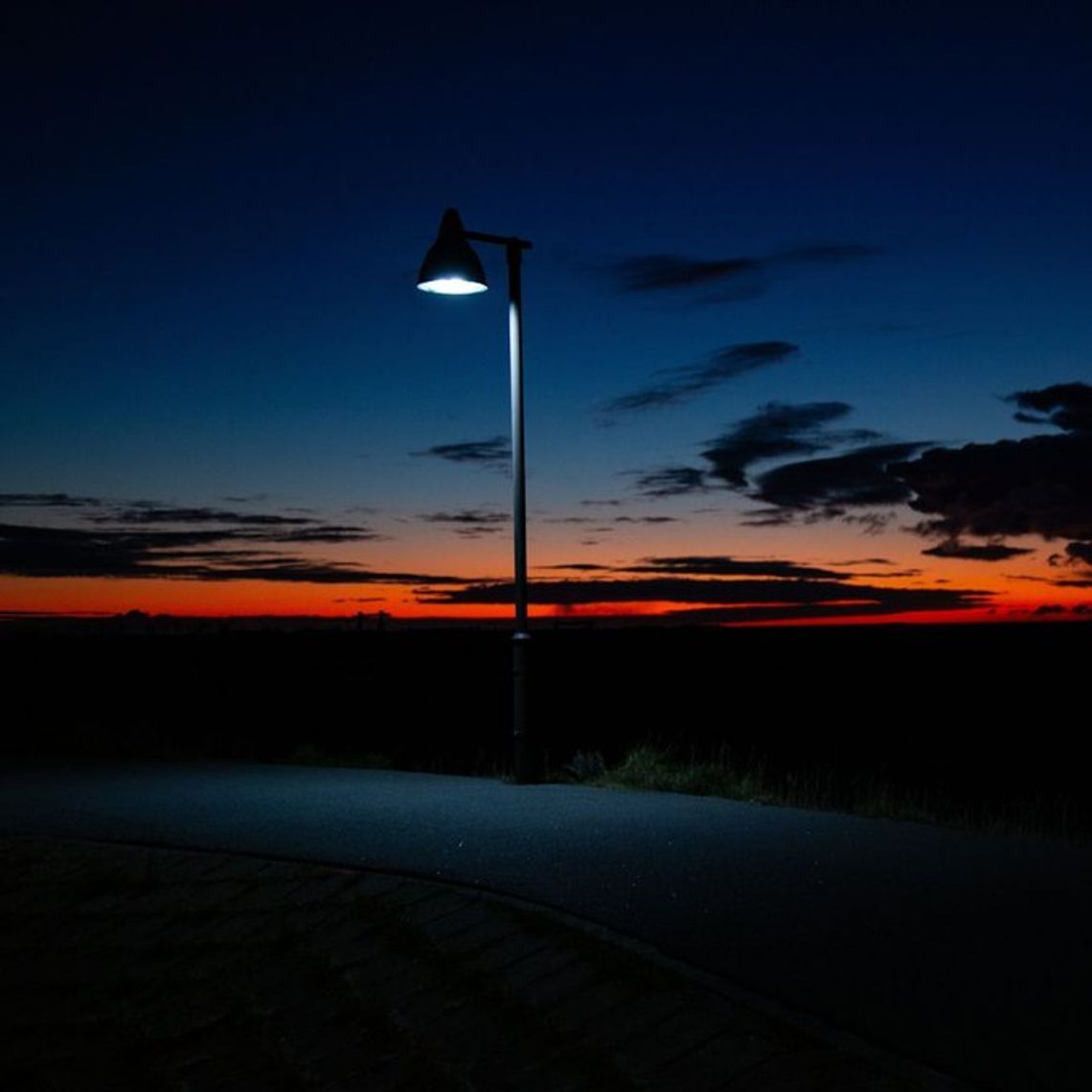
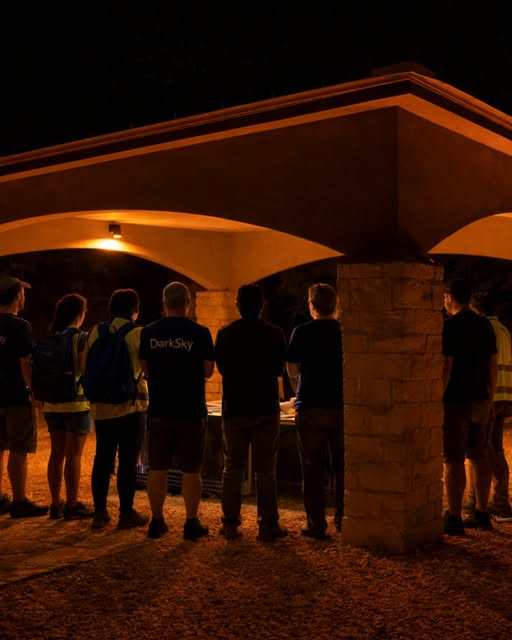
If you instinctively clap four times after hearing “The stars at night are big and bright,” the mission behind DarkSky Texas may resonate. But across Texas and the Hill Country, those stars are becoming harder to see.
As communities across Central Texas continue to grow, preserving the region’s dark, star-filled skies is becoming an increasing challenge. In Dripping Springs, that effort has been in place for decades, shaping both policy and community culture.
International Dark Sky Week, traditionally observed in April, highlights those efforts and encourages residents to take simple steps to reduce unnecessary light.
Dripping Springs was the first community in Texas to receive designation as an International Dark Sky Community, helping establish a model that other Hill Country cities have since followed. At the time, there were only a handful of such communities worldwide.
Dawn Davies, Night Sky Program Manager for the Hill Country Alliance, said Dripping Springs helped bring early attention to night sky preservation in Texas.
“They were the first Dark Sky community in the state of Texas to get their designation,” Davies said. “They really got the ball rolling and brought that interest not only to the community, but also from a perspective of being at the gateway to the Hill Country.”
Davies said the city’s approach has balanced preservation with growth, particularly along the busy U.S. 290 corridor.
“I often cite what they have done with their lighting,” she said. “Driving down 290 at night is one of the most pleasant things to do, as opposed to driving through a major metropolitan area. You can embrace the dark landscape, but you can also still see very decently and consciously lit businesses without it being bright and glaring.”
That balance has been maintained through a long-standing lighting ordinance and ongoing coordination with developers, landowners and business owners.
“They really won the whole gamut from the application process to carrying it on and maintaining an amazing ordinance,” Davies said.
Over time, she said, those standards have become part of daily life in the community.
“A lot of the work they don’t have to do as much anymore with regards to enforcing or helping educate people, because it’s become such a normal part of living in Dripping Springs,” Davies said. “If someone new comes in with bright lights, the surrounding neighbors will let them know that this isn’t how we operate here.”
That level of community buy-in, she said, has been key to long-term success.
“The community has embraced the change and the improvement it’s provided, and they understand the value,” Davies said.
Hays County has started a practice of incorporating DarkSky lighting requirements, largely following the city of Dripping Springs' version, into development agreements throughout the county. While they don’t have the authority to require properties to comply with such a rule in the vein of a city ordinance, the practice has often gotten new commercial development in the unincorporated areas of the county to start with dark sky lighting practices.
The broader impact of those efforts is now becoming measurable.
Davies said recent data from Hill Country communities shows that sustained dark sky practices can lead to real improvements in sky quality over time.
“We’ve heard from partners in Blanco and Dripping Springs that, over years of monitoring, they’ve actually seen the sky improve,” she said. “That’s huge. It shows what can be done when communities partner with residents and embrace these efforts.”
Dark sky monitoring, which involves collecting regular measurements of sky brightness, is a requirement for maintaining designation and allows communities to track long-term trends.
The findings come as the Hill Country continues to experience rapid growth, increasing pressure on nighttime conditions.
DarkSky Texas, the state chapter of DarkSky International, works to address that challenge through education and advocacy.
Board member Soll Sussman said the issue goes beyond stargazing.
“We’re trying to bring awareness about responsible outdoor lighting to as many people in Texas as we can,” Sussman said. “We are losing our view of the night sky at a significant rate, but just as importantly, light pollution affects wildlife, plants and human health.”
Some estimates suggest visibility of the night sky is declining by as much as 10% per year in some areas, driven largely by increasing artificial light at night.
Artificial light can disrupt natural cycles for birds and other wildlife, interfere with plant growth and impact human sleep patterns. While preserving the stars is a visible benefit, Sussman said the broader goal is improving overall environmental and community well-being.
The issue is especially pronounced in fast-growing areas like Dripping Springs, where new development continues to expand.
“People move out here for the rural beauty and the night skies,” Sussman said. “But they often bring habits from the city, like leaving bright lights on all night, and that adds up.”
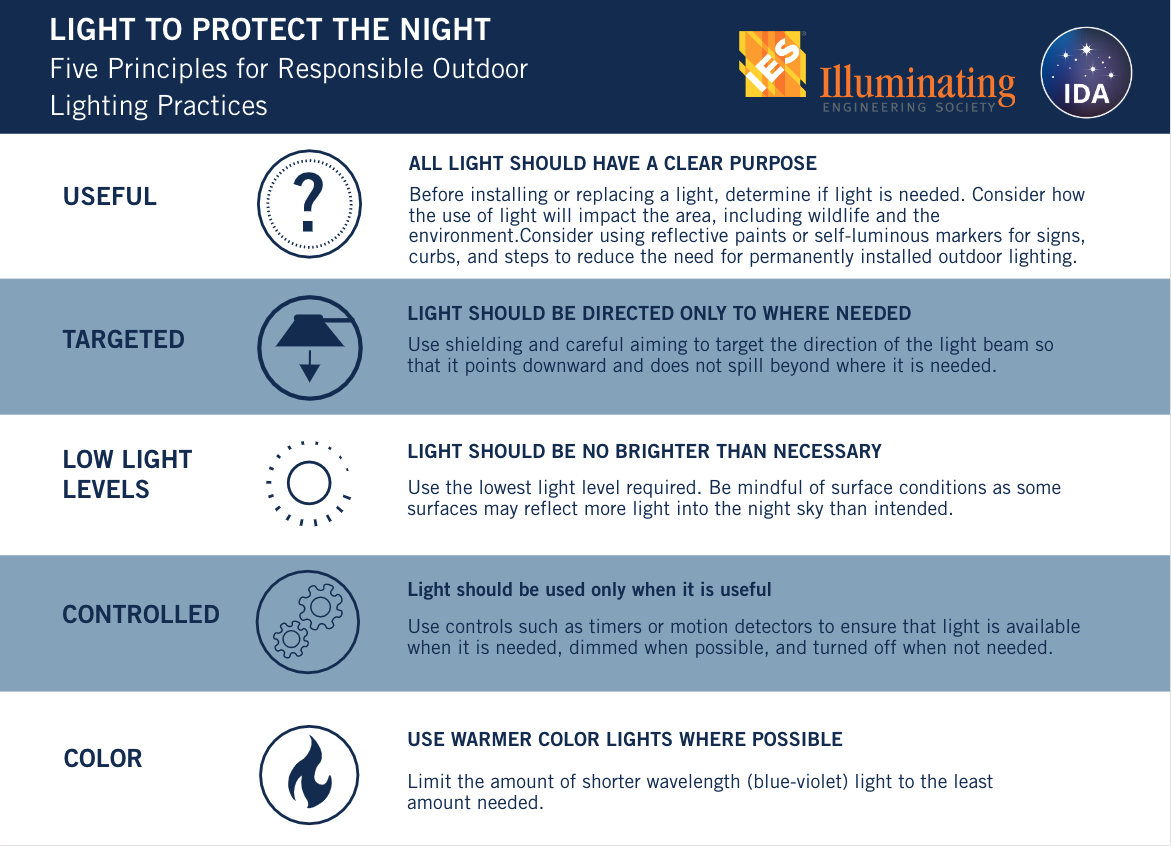
DarkSky Texas emphasizes practical steps residents can take to reduce excess lighting without sacrificing safety, including directing light downward, limiting brightness, using timers or motion sensors and choosing warmer-colored bulbs.
For residents, that can be as simple as replacing bright white bulbs, adding shields to fixtures or turning off unnecessary lights overnight.
“Lighting doesn’t automatically make a place safer,” Sussman said. “There’s little consistent evidence that brighter lighting alone reduces crime, but there is clear evidence that poorly used light creates problems.”
As Dripping Springs continues to grow, Davies said its long-standing approach shows that development and preservation can coexist.
“They’ve shown that you can grow and still protect the night sky,” she said.
As development continues across the Hill Country, that balance between growth, tourism and conservation will shape whether future generations still have a chance to enjoy those stars at night that are big and bright deep in the heart of Texas.