.png)


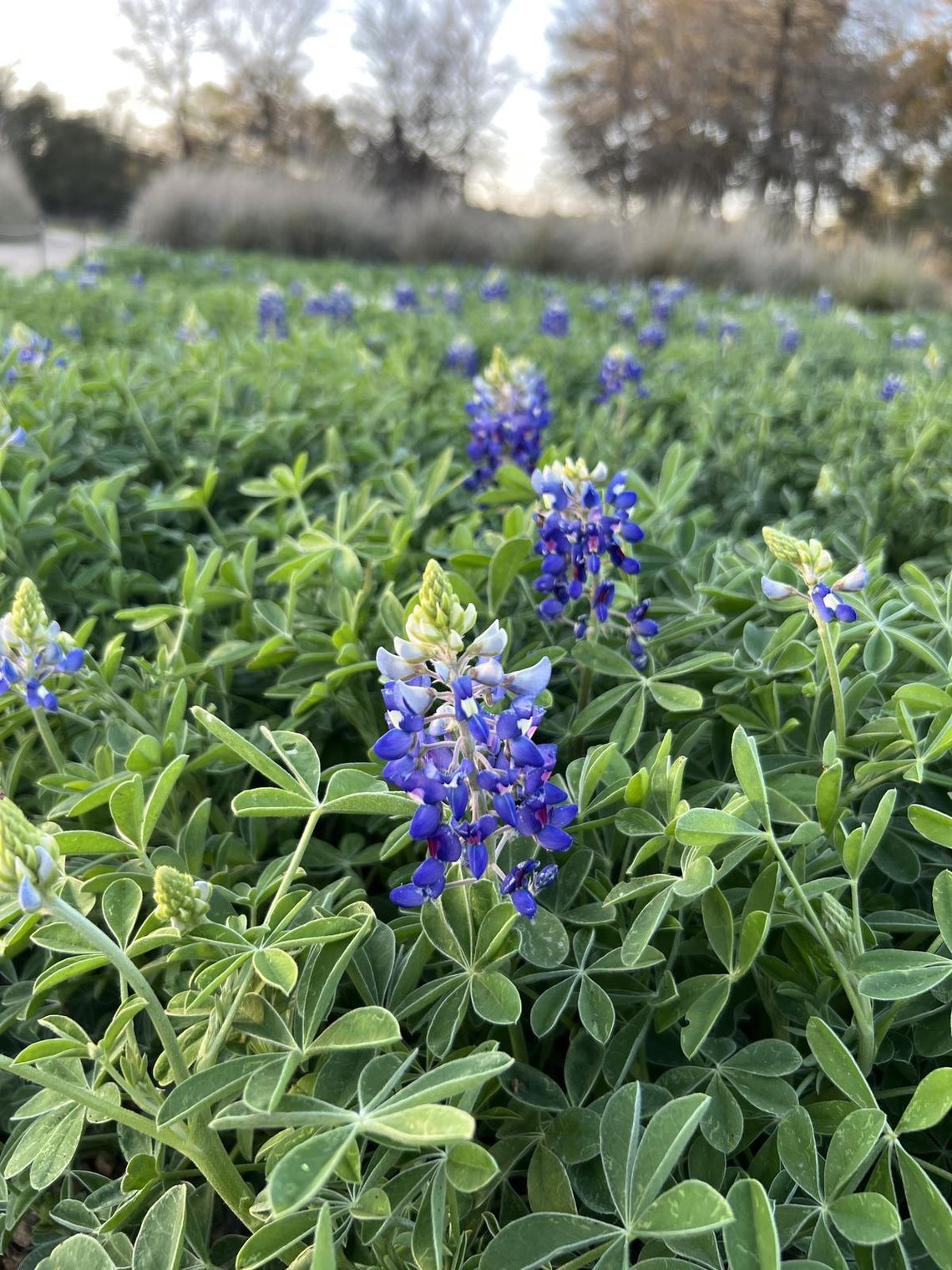
With their soft, delicate leaves and rich blue petals, Texas bluebonnets are often seen as the belle of the ball when it comes to wildflower season. People seek out sprawling fields of the state flower or even pull over on the side of the road just to take their photograph - often with their kids or pets.
Over the past week or two, the bluebonnets in the Dripping Springs area have started to emerge, but experts at the Lady Bird Johnson Wildflower Center say fans might have to look a little harder for the blue beauties this year due to uneven rainfall across the Southwest and lingering drought in several regions - though there will be exceptions.
“We’ve all seen spots where plants seem to be thriving in an otherwise not-so-hospitable landscape,” says Kyle Cheesborough, the Center’s new director of gardens and collections. “This could be the result of microclimates created via irrigation practices, ambient heat from hardscapes, and other cultural maintenance practices.”
Andrea DeLong-Amaya, the Center’s horticulture educator, said the overall wildflower forecast is mixed.
”In a state as geographically vast and varied as Texas, it’s rare that we can make a forecast that suits the whole state,” DeLong-Amaya said. “We have wild fluctuations in weather and lots of microclimate scenarios, and this year’s bloom season will be just as varied as that. We’re hopeful for more spring rain to bring out the later-blooming flowers.”
When early spring bloomers like bluebonnets are sparse, that often means that later-season wildflowers have more room to flourish. Firewheel (Gaillardia pulchella) and purple horsemint (Monarda citriodora), could show up stronger than usual later in the season.
Additionally, the tough, woody Carolina jessamine (Gelsemium sempervirens) – which was named Wildflower of the Year by the Lady Bird Johnson Wildflower Center – is already putting on a spectacular show. It’s a perennial evergreen vine with profuse, showy yellow flowers.
Wildflower Center staff chose Carolina jessamine as the Wildflower of the Year because of its sweet fragrance, adaptability to various soils and light conditions, and its vital role in providing food for essential pollinators.
Carolina jessamine reaches up to 20 feet long and can serve as an ornamental evergreen screen in the landscape. The plant is a low-maintenance, dependable garden performer, and has the ability to bloom off and on throughout the growing season.
For a guaranteed look at a wide variety of wildflowers throughout the spring season, including Carolina jessamine, area residents and guests can visit the Wildflower Center, which is open daily from 9 a.m. to 5 p.m., with last entry at 4 p.m. The Wildflower Center, the official Botanic Garden of Texas, features 284 acres of scenic gardens and trails. Learn more at www.wildflower.org.