.png)


CONTRIBUTED BY DAVID JAMES
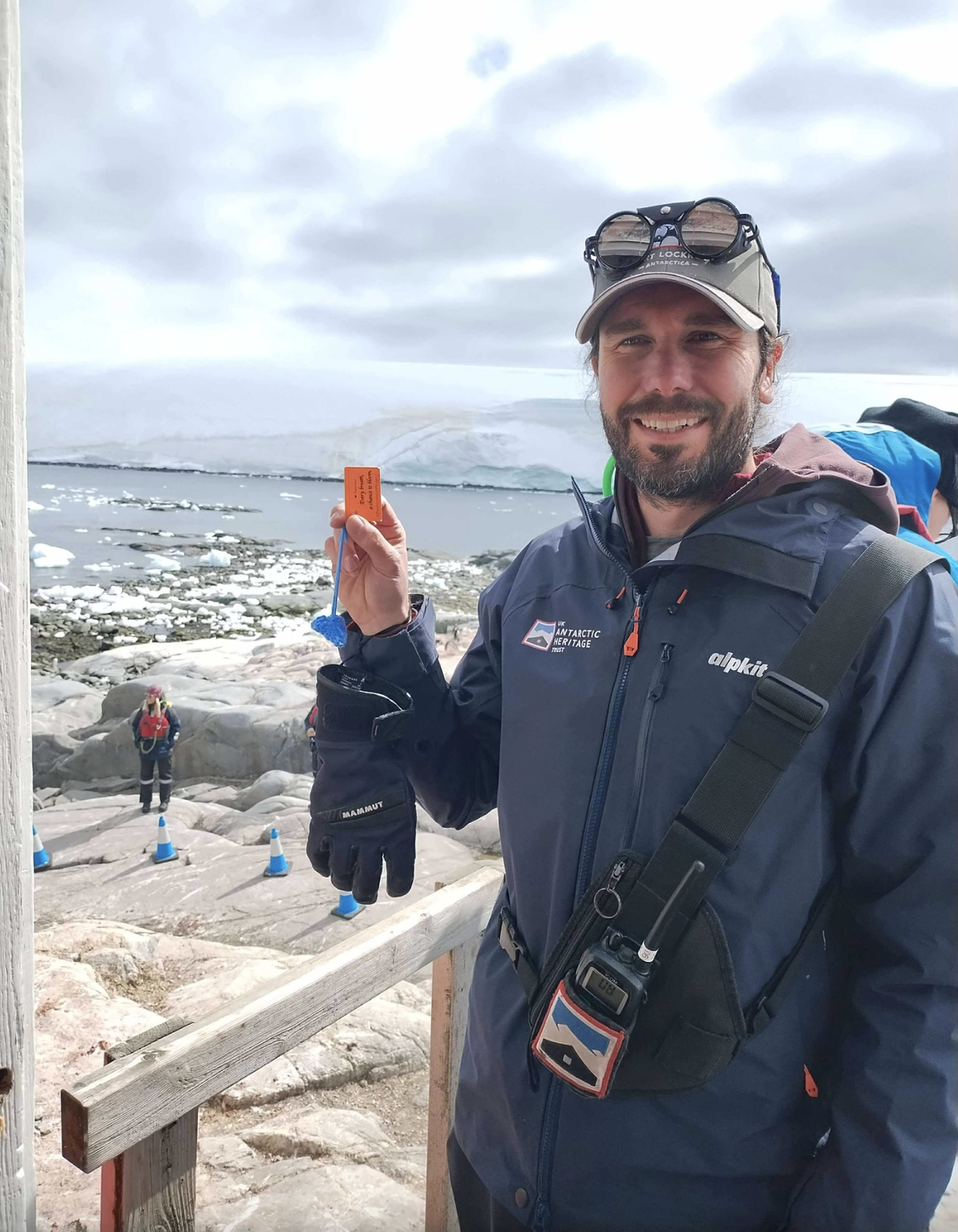
A crochet heart arrives in Antarctica.

CONTRIBUTED BY DAVID JAMES
Penguins lounge on the beach in Antartica.
A couple of tiny crocheted hearts have made the long journey to the continent of Antarctica, arriving on the shore at Port Lockroy in January. With this milestone, these small symbols of hope, part of the Peyton Heart Project, have now reached every continent on the globe.
“For years, I’d always told people the hearts have been found in all 50 states, close to 70 countries worldwide, and in every continent except Antarctica,” said David James, co-founder of the Peyton Heart Project. “And now it’s done. The fact that it’s been on every continent is amazing.”
James, who lives in Dripping Springs, said the project is named after his son, Peyton, who died by suicide in 2014 at 13 years of age. The Peyton Heart Project aims to spread a message of hope to others who may be struggling with mental health issues.
“Mental illness is a worldwide problem. There’s close to a million suicides worldwide each year,” James said. “And generally, for every suicide, there’s 25 unsuccessful attempts. Obviously, there’s something that needs to be done.”
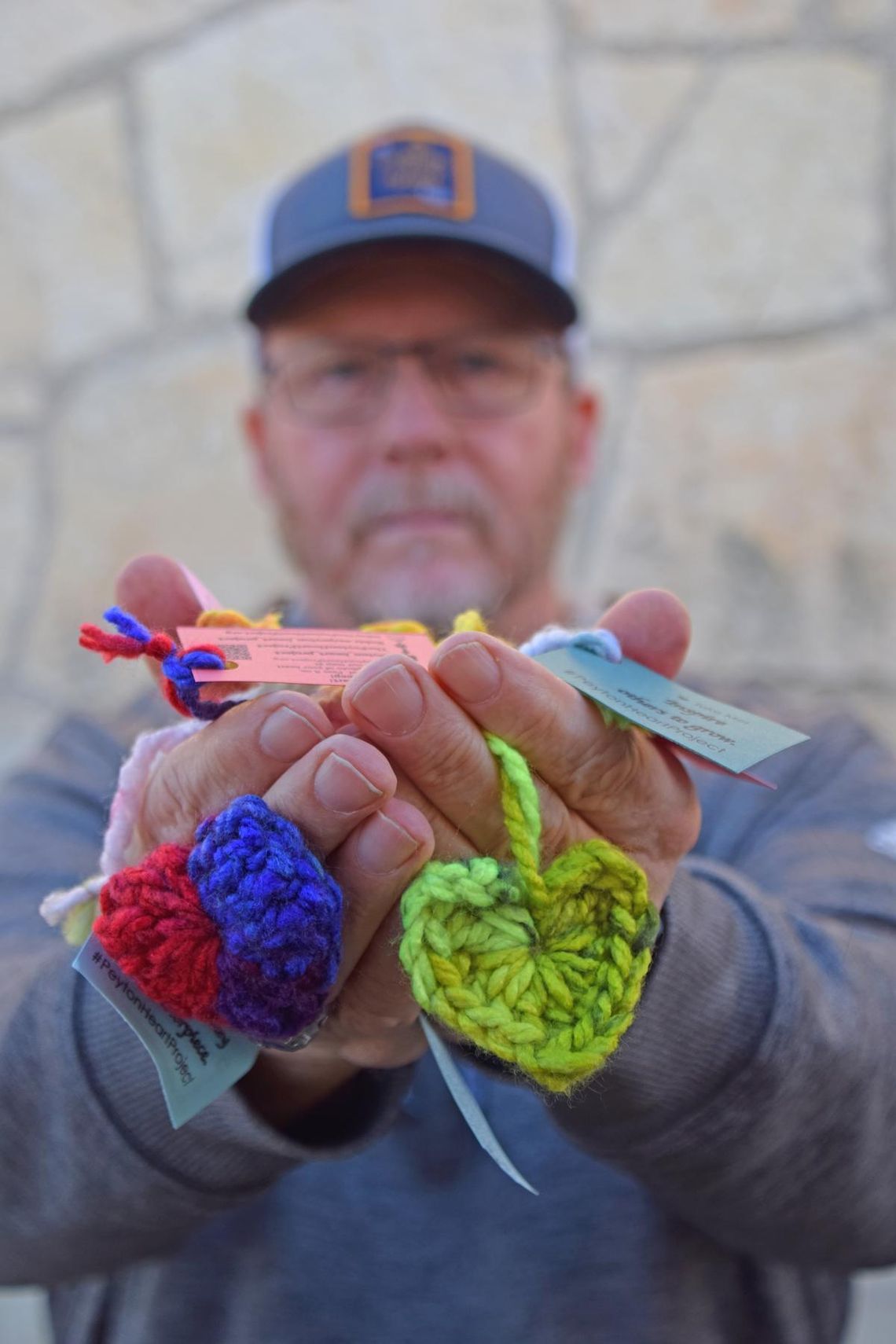
James said that many people want to help others, but they don’t always know how. These small crochet hearts provide a way to do that. People can participate by making the hearts, by printing and adding the tags to hearts, or by leaving the hearts in places where they can be found by others who might need their message.
“This is something simple. It’s not a grand gesture in any way,” James said. “It’s a small gesture that can resonate with just about anybody.”
For some people, finding a heart is just a nice surprise, James said.
“Other times people will say, ‘I was in a dark place, I was struggling, and I found this and it meant so much, just that little gesture,’” James said. “You read those comments and you realize it really does have that reach that you were hoping for.”
On the website for the Peyton Heart Project, people can click on a map and add a photo of the heart they found, along with a comment if they’d like to add one. When photos and comments come in, James is the one who reads them and posts them.
“I always read what they write, if they leave a note or something like that,” he said.
He said he hopes the hearts help open conversations, and that they send the message that every life matters.
“There are people that care, even in your darkest place. You just don’t realize it,” James said. “You’re battling an illness that is affecting your mind. And it’s telling you that you’re worthless, that you are a terrible person, the world would be better off without you, that no one would care that you’re gone. And that’s not true. You matter in so many different ways. The world is better with you in it.”
James said for him, the hearts symbolize hope for the future. He hopes they encourage people who are struggling to reach out.
“If it’s not a mental health professional, then a teacher or a coach or a principal, clergy - somebody that can help,” James said.
In the years since Peyton’s death, James has met a lot of people affected by suicide - both the families and friends who were left behind, and people who attempted suicide and survived.
“They’re like, ‘Looking back, it was just this impulsive thing, and as soon as I did it, I regretted it,’” James said. “They don’t want to die, they just want that pain to end.”
He believes that is part of what happened with his son Peyton. He had battled anxiety and depression, and was also a target of bullying.
“This is a kid that just wanted everyone to like him, to be happy. He wanted people to laugh, he wanted to entertain,” James said. “He didn’t ask for what happened to him.”
Peyton had attempted to get help with the bullying issues with little success - including on the day of his attempt.
“It just came to a head that day and he was frustrated,” James said. “He was angry and just very impulsive. So he went home and took his life.”
James said that over the past decade, people have become more open to talking about mental health.
“When Peyton first passed, the stigma was so great,” James said. “Now, people are talking about it more. People are more willing to come forward and say, I need help.”
The Peyton Heart Project is always looking for people who’d like to volunteer for the cause.
“Not everybody can write a check. Not everybody has a wad of cash they can give away. But, you know, people can request hearts and hand them out. Or they can make them and donate them.”
He said a lot of volunteers also like to follow the map on the website and see photos of the hearts and comments from the finders.
“Anybody in this community can help. If they can create hearts, we need them. If they wanna take them with them, if they’re going on vacation or wherever, let me know,” James said.
James said that high school students who need service hours can make the hearts, or even make and attach the tags. There’s also a scholarship in Peyton’s name that was started last year. It is awarded to a Dripping Springs High School senior. The application can be found online at bold.org.
The main message James wants to get out to the community is that mental health isn’t going to fix itself on its own, and that everyone can do something to help.
“When somebody says they’re struggling, don’t blow it off. Take it seriously,” James said. “I know that it’s difficult to deal with, but dealing with it is a lot better than dealing with the aftermath. Trust me.”