.png)


The year was 1993; long before I had taken up my vocation as an artist. I had just started a new position working with banking organizations in San Antonio. While shadowing a peer, I entered the main lobby of the Broadway National Bank. As we waited to meet with our client, I scanned the wide, formal space and couldn’t take my eyes off the 7’ x 9’ mural painting depicting the first moonwalk. The work’s scale, combined with the depth and texture of the oil medium was breathtaking.
At the moment, I thought it was an interesting choice of subject to be placed in the lobby of a financial services company.
Skip forward to now, as I’m contemplating this article, the reason is obvious. The building was completed in 1968, at the height of America’s competition with the USSR to put a man on the moon. The space race was a pillar of the American psyche at the time, and while the painting was finished a few years later, it makes complete sense that a bank would display art that represented one of our country’s cultural focal points, not to mention our national desire to succeed.
That particular connection is Exhibit A that art, with its diverse styles and meanings, is often, or some might say always, a product of the culture in which it’s created or intended for.
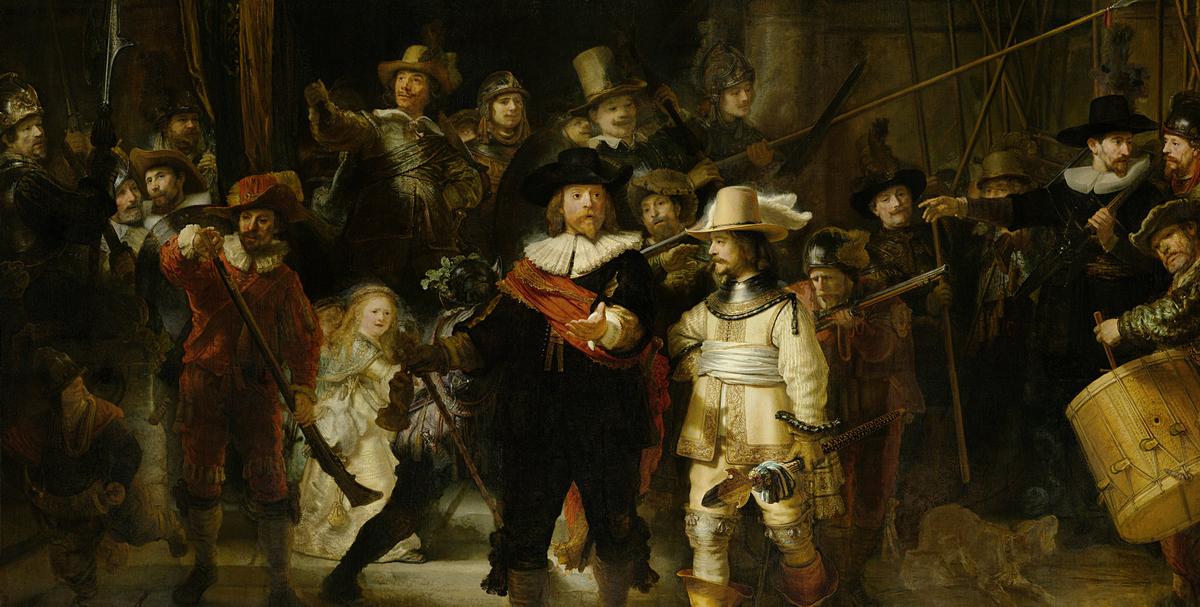
“The Night Watch” by Rembrandt
History in Art / Art in History
Art history gives many more examples of the connection between art and the cultural norms and emerging themes of its era. Just look for how they depict meaningful events or shifts in society. Rembrant’s famous work, The Night Watch, was offered as a tribute to a golden age of Dutch civic pride, duty and commitment to a cause greater than oneself.
Similarly, we’ve all seen Emanuel Leutze’s iconic painting of George Washington Crossing the Delaware, reflecting a key moment in America’s successful struggle as an independent nation. While his painting came much later, its connection with cultural pride is obvious.
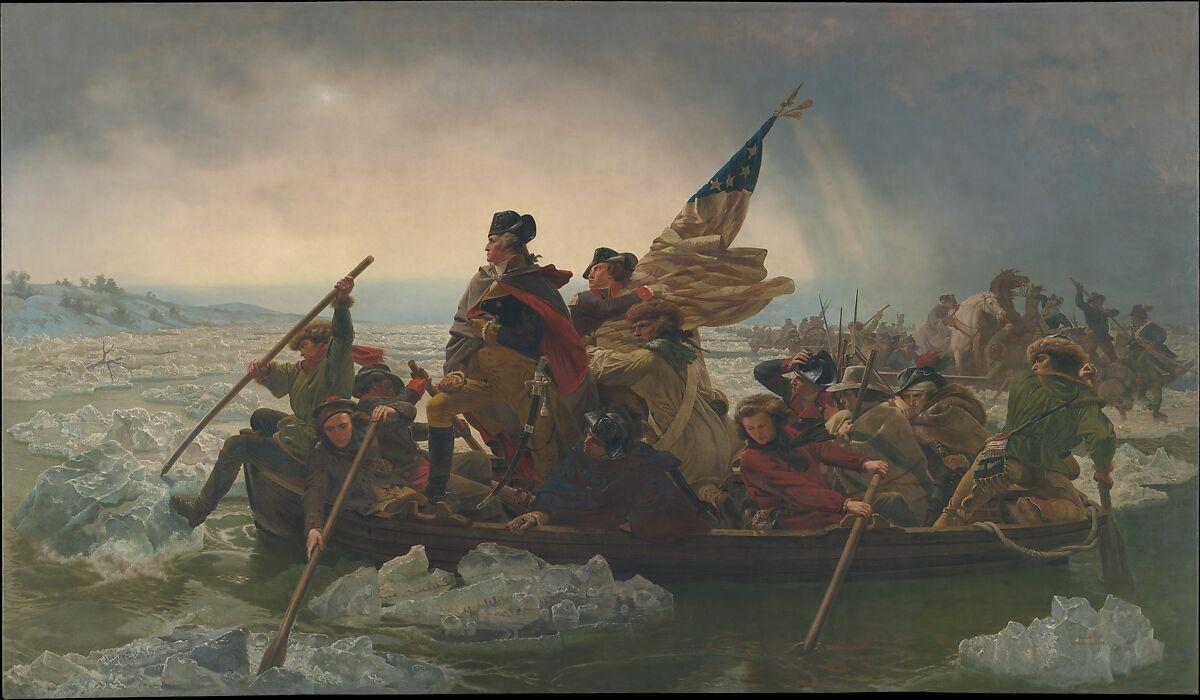
“George Washington Crossing the Delaware” by Emanuel Leutze
The artist in me, however, appreciates the other side of this coin, the ways in which our collective culture can be influenced by works of art.
Banksy, the street artist, comes to mind. His works go so far as to make a direct point of challenging the status quo, calling out inequity or highlighting hypocrisy where he sees it. His work, Devolved Parliament, while comical in its presentation, offers an unmistakable conclusion about the state of at least one governing body. His anonymity, combined with his ubiquity, perhaps adds a layer of fascination, as we wonder, “Who?”
Looking farther back, the pop art icon Andy Warhol cannot be overlooked for his influence on 20th century society. The 50’s, 60’s and 70’s were transformative years in American culture to begin with, but Warhol’s contributions stand out. He’s credited with blurring the lines between art and commerce, elevating simple everyday objects as art subjects. His creative and frequent use of celebrities gave his famous subjects a more relatable status in the eyes of the public. His now famous quote about everyone having their fifteen minutes of fame was foretelling of the era of reality television and viral social media content.
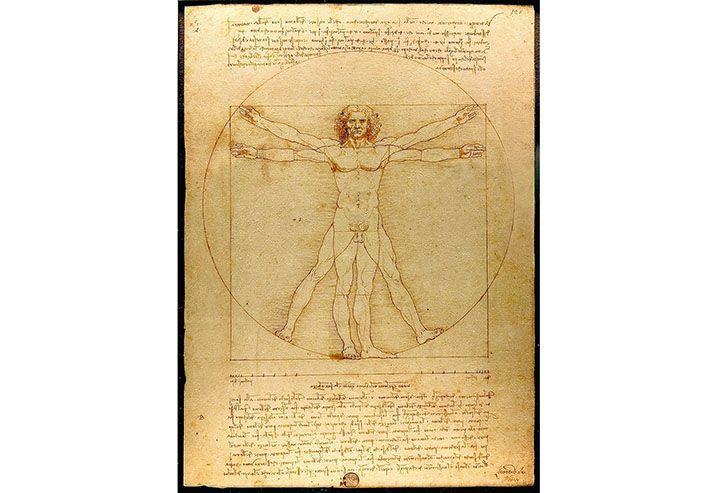
“Vitruvian Man” by Leonardo da Vinci
Lastly, the work of Leonardo da Vinci most stands out for me as having the most impactful results on society, both in his era and now. For one, the original renaissance man blended the disciplines of art, science, engineering, observation and anatomy to influence how mankind viewed itself and the possibilities of invention.
While presented in the form of drawings, his mechanical designs for flight, warfare and transport formed the basis for groundbreaking inventions centuries later. He was among the earliest practitioners of what we now refer to as the scientific method, applying in-depth observation as the foundation of study. I have a book that is nothing more than a collection of da Vinci’s handwritten notes, but it’s clear that he observed the world around him obsessively, and made a point of writing down what he saw, along with every conclusion he arrived at as a result. It’s the closest one can get to seeing how his great mind worked.
Despite his fame today, da Vinci, like all artists of his era, had to hustle to make a living. Finding patrons, whether individuals or governments, to support him was a constant effort. His most famous works, some now valued in the tens of millions of dollars, were all the product of a patron’s commission to him. So perhaps we can also conclude that there are some aspects of the relationship between art and society that may never change.
So the next time you see a painting, drawing or sculpture that stands out as different; one that makes you stop and pay attention, ask yourself a question. What does it say about society, or how does the culture we live in influence what you think of it?
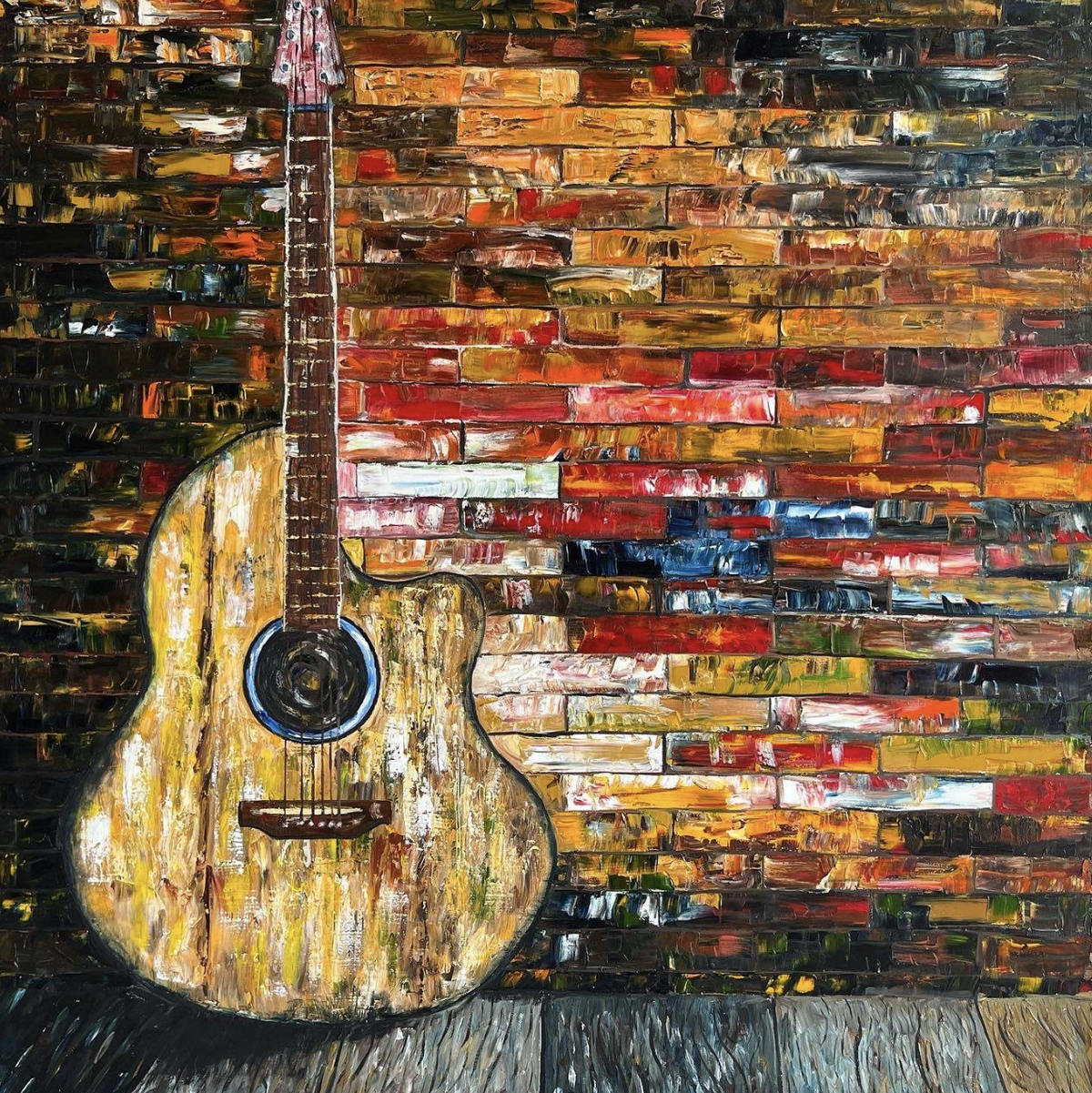
”Guitar” by Joe Christenson
Joe Christenson is a local artist with works in several area galleries. He also pens the My Favorite Part of Texas column in the Dripping Springs Century News. View Joe’s art at https://joe-christenson.pixels.com/

JOE CHRISTENSON